Origins in Scripture
The earliest references to Sri Shaila — the sacred mountain on which the Peetham stands — are found in the Mahabharata, the Skanda Purana, the Shiva Purana, and the Devi Bhagavata Purana. The Skanda Purana devotes an entire khanda — the Sri Shaila Khanda — to the kshetra, recounting the descent of Lord Shiva as Mallikarjuna and the manifestation of the Goddess as Bhramaramba.
The legend recounted there is one of the most beloved in the Saiva‑Shakta canon: when the divine sons Ganesha and Kartikeya wished to marry, Lord Shiva proclaimed that whichever of them first circumambulated the world would be wed first. Kartikeya set off on his peacock at once. Ganesha simply walked around his parents — Shiva and Parvati — declaring that they were his world. Shiva, delighted, granted him the boon. When Kartikeya returned and learned of this, he renounced the householder's life and ascended the peak of Krauncha. Shiva and Parvati followed their son to console him; the mountain on which they came to reside is Sri Shaila itself.
"Mallikarjunam Sri Sailee" — so begins the Dwadasha Jyotirlinga Stotram, naming Srisailam as the second of the twelve eternal radiant lingas.
The Maha Shakti Peetha
According to the Devi Bhagavata Purana and the Pithanirnaya of the Tantra Chudamani, when Lord Vishnu severed the body of Sati Devi to release Shiva from his sorrow, fifty‑one parts of the Goddess fell across the sacred geography of Bharat. At Srisailam, it is the upper neck — the griva — that is said to have descended; some traditions describe it as the right foot. Whichever the interpretation, the place was sanctified as one of the eighteen Maha Shakti Peethas extolled by Adi Shankaracharya in his Ashtadasha Shakti Peetha Stotram.
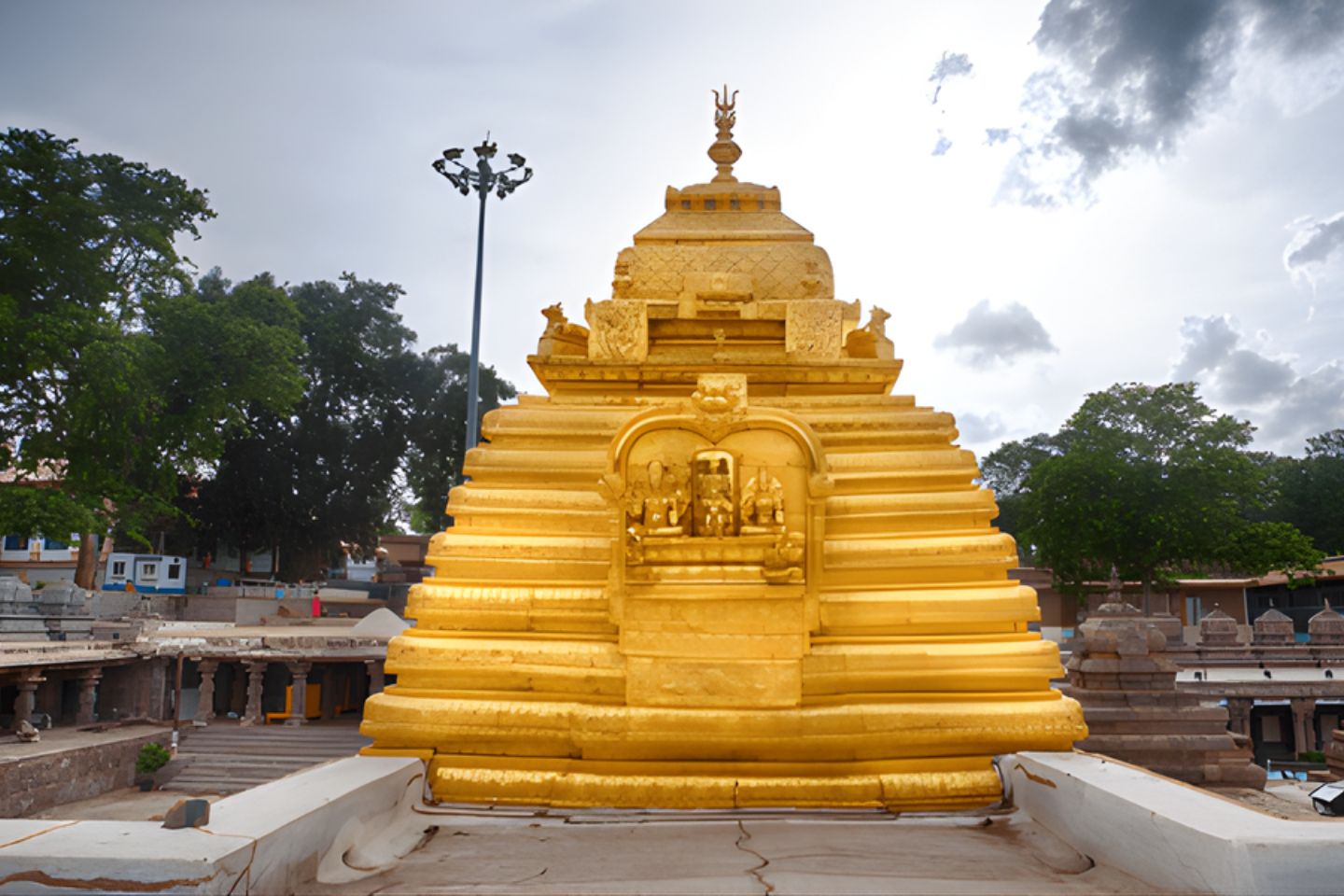
The Satavahana and Ikshvaku Centuries (2nd–4th c. CE)
Inscriptional evidence for organised worship at Srisailam goes back nearly two millennia. The Nagarjunakonda inscriptions of the Ikshvaku queens — particularly those of Queen Chamtisiri — record gifts to Mahadeva of Sriparvata, the earliest surviving epigraphic name of the kshetra. Buddhist chaityas at Nagarjunakonda and stupa fragments at Amaravati point to a vibrant religious landscape around the sacred hill, in which the Saiva tradition was already pre‑eminent.
The Pallava, Chalukya and Kakatiya Patronage (7th–13th c. CE)
The Pallava and the Eastern Chalukya monarchs renovated and expanded the sanctum during the seventh and eighth centuries. The Kakatiya rulers of Warangal — Prataparudra II in particular — endowed the kshetra with mantapams, agraharams and revenue grants, ensuring the temple's continuous service. The famous Veera Shaiva saint Pampanna and the Kannada poet‑saint Palkuriki Somanatha composed devotional works centred on Mallikarjuna of Srisailam during this period.
The Vijayanagara Renaissance (14th–16th c. CE)
It was the Vijayanagara emperors who gave the temple its present monumental form. Sri Krishnadevaraya, the greatest of the Tuluva kings, visited Srisailam in 1516 CE and constructed the magnificent Mukha Mantapam — the entrance hall whose pillars still bear the carved scenes of the Ramayana, Mahabharata and Bhagavata. He is also credited with strengthening the temple's administrative endowments. The carved walls of the Mantapam, with their friezes of dancers, gandharvas and processional elephants, remain a touchstone of Vijayanagara stone craftsmanship.
"On the auspicious day of Karttika Pournami, the great King Krishnadeva Raya offered jewels and a mukuta to the Lord and the Devi at Sri Saila." — paraphrased from a Vijayanagara‑era inscription within the temple.
The Adi Shankara Connection
Sri Shaila holds a unique place in the spiritual biography of the eighth‑century polymath Adi Shankaracharya. Tradition records that during his sojourn in the south, the Acharya climbed the Sri Shaila and resided here for an extended tapas. It was here that he composed the celebrated Sivanandalahari — a hundred verses on Lord Shiva — and the matchless Bhramaramba Ashtakam, a hymn of eight stanzas to the bee‑swarming Goddess. These works remain in continuous recitation across India to this day.
Modern Stewardship
In the modern era, the kshetra is administered by the Srisailam Devasthanam under the State of Andhra Pradesh, with extensive infrastructure for pilgrim accommodation, annadanam, ritual sponsorship and hill access. The construction of the Srisailam Hydroelectric Project on the Krishna in the 1960s‑80s reshaped the surrounding landscape, but the sanctum, the Mukha Mantapam and the surrounding shrines have been carefully preserved. Today, the temple welcomes several million pilgrims a year — particularly during Maha Sivaratri, when the Brahmotsavam draws devotees from across the subcontinent.
An Unbroken Lineage
From the Ikshvakus to the Vijayanagara, from Adi Shankara to the contemporary Sri Sannidhanam, the Bhramaramba Mallikarjuna kshetra has remained a continuous, living, breathing centre of Saiva‑Shakta worship for at least fifteen hundred years. Few sites in the world can claim so unbroken a thread. To stand within its Mukha Mantapam — under pillars that have heard the chants of emperors and saints alike — is to step into a stream of devotion that flows still.
শাস্ত্রে উৎপত্তি
যে পবিত্র পর্বতে পীঠ অবস্থিত — সেই শ্রী শৈলের প্রাচীনতম উল্লেখ পাওয়া যায় মহাভারত, স্কন্দ পুরাণ, শিব পুরাণ ও দেবীভাগবত পুরাণ‑এ। স্কন্দ পুরাণে এই ক্ষেত্রের জন্য একটি সম্পূর্ণ খণ্ড — শ্রী শৈল খণ্ড — উৎসর্গীকৃত, যেখানে মল্লিকার্জুন রূপে শিবের অবতরণ ও ভ্রমরাম্বা রূপে দেবীর প্রকটতার বর্ণনা আছে।
সেখানে কথিত কিংবদন্তি শৈব‑শাক্ত পরম্পরায় অন্যতম প্রিয় গাথা: গণেশ ও কার্তিকেয় বিবাহের ইচ্ছা প্রকাশ করলে শিব ঘোষণা করেন — যিনি প্রথমে পৃথিবী প্রদক্ষিণ করবেন, তাঁর বিবাহ আগে হবে। কার্তিকেয় ময়ূরে চড়ে যাত্রা শুরু করেন; গণেশ পিতামাতা শিব‑পার্বতীর চারপাশে প্রদক্ষিণ করে বলেন — "আপনারাই আমার পৃথিবী।" শিব প্রসন্ন হয়ে তাঁকে বরদান করেন। কার্তিকেয় ফিরে এসে এই সংবাদ শুনে গৃহস্থ জীবন ত্যাগ করে ক্রৌঞ্চ শিখরে আরোহণ করেন। শিব ও পার্বতী পুত্রের সান্ত্বনার্থে অনুসরণ করেন; যে পর্বতে তাঁরা অবস্থান করেছিলেন — তাই শ্রী শৈল।
"মল্লিকার্জুনং শ্রীশৈলে" — দ্বাদশ জ্যোতির্লিঙ্গ স্তোত্রের সূচনা, যেখানে শ্রীশৈলম্ দ্বাদশ চিরন্তন জ্যোতির্ময় লিঙ্গের দ্বিতীয় হিসেবে নামাঙ্কিত।
মহাশক্তিপীঠ
দেবীভাগবত পুরাণ ও তন্ত্রচূড়ামণির পীঠনির্ণয় অনুসারে, ভগবান বিষ্ণু যখন শিবের শোক নিরসনে সতী দেবীর দেহ ছেদন করেন — তখন দেবীর একান্নটি অংশ ভারতের পবিত্র ভূভাগে পতিত হয়। শ্রীশৈলমে পতিত হয় ঊর্ধ্ব গ্রীবা; কোনো পরম্পরায় ডান চরণ। যেভাবেই বর্ণিত হোক — এই স্থান আদি শঙ্করাচার্যের অষ্টাদশ শক্তিপীঠ স্তোত্রম্‑এ ১৮ মহাশক্তিপীঠের অন্যতম রূপে পবিত্রীকৃত।
সাতবাহন ও ইক্ষ্বাকু যুগ (২য়–৪র্থ শতক)
শ্রীশৈলে সংগঠিত উপাসনার শিলালেখ‑প্রমাণ প্রায় দুই সহস্রাব্দ পুরোনো। ইক্ষ্বাকু রানীদের — বিশেষত রানী চামতিসিরির — নাগার্জুনকোণ্ড শিলালেখে শ্রীপর্বতের মহাদেব‑কে দান উল্লিখিত, যা এই ক্ষেত্রের প্রাচীনতম বেঁচে থাকা শিলালেখ নাম। নাগার্জুনকোণ্ডের বৌদ্ধ চৈত্য ও অমরাবতীর স্তূপ অংশসমূহ এই পবিত্র পর্বত ঘিরে এক জীবন্ত ধর্মীয় পরিবেশের ইঙ্গিত দেয় — যেখানে শৈব পরম্পরা পূর্বেই প্রবল।
পল্লব, চালুক্য ও কাকতীয় পৃষ্ঠপোষকতা (৭ম–১৩শ শতক)
পল্লব ও পূর্ব চালুক্য রাজগণ সপ্তম‑অষ্টম শতাব্দীতে গর্ভগৃহ সংস্কার ও সম্প্রসারণ করেন। ওয়ারঙ্গলের কাকতীয়রা — বিশেষত প্রতাপরুদ্র দ্বিতীয় — এই ক্ষেত্রে মণ্ডপম্, অগ্রহারম্ ও রাজস্ব দান প্রদান করেন, মন্দিরের অবিচ্ছিন্ন সেবা নিশ্চিত করেন। বিখ্যাত বীরশৈব সন্ত পম্পান্না এবং কন্নড় কবি‑সন্ত পল্কুরিকি সোমনাথ এই যুগে শ্রীশৈলমের মল্লিকার্জুনকে কেন্দ্র করে ভক্তিরচনা সৃষ্টি করেন।
বিজয়নগর নবজাগরণ (১৪শ–১৬শ শতক)
বিজয়নগর সম্রাটগণই মন্দিরকে দিয়েছেন বর্তমান বিশাল রূপ। তুলুব রাজবংশের শ্রেষ্ঠ শ্রী কৃষ্ণদেবরায় ১৫১৬ খ্রিস্টাব্দে শ্রীশৈলম্ পরিদর্শন করে অপূর্ব মুখ মণ্ডপম্ নির্মাণ করেন — যার স্তম্ভে এখনো রামায়ণ, মহাভারত ও ভাগবতের খোদাই দৃশ্য বিদ্যমান। তিনিই মন্দিরের প্রশাসনিক দান শক্তিশালী করেন। মণ্ডপমের খোদাই — নৃত্যশিল্পী, গন্ধর্ব ও শোভাযাত্রার হস্তীর সারি — আজও বিজয়নগর প্রস্তর শিল্পের প্রতীক।
"কার্তিক পূর্ণিমার শুভ দিনে মহারাজ কৃষ্ণদেবরায় শ্রীশৈলে ভগবান ও দেবীকে রত্ন ও মুকুট নিবেদন করেছিলেন।" — মন্দিরে অবস্থিত একটি বিজয়নগর‑যুগ শিলালেখ থেকে অনূদিত।
আদি শঙ্কর সংযোগ
অষ্টম শতাব্দীর সর্বজ্ঞ আদি শঙ্করাচার্যের আধ্যাত্মিক জীবনে শ্রী শৈলের এক অনন্য স্থান আছে। দক্ষিণ ভ্রমণকালে আচার্য শ্রী শৈল আরোহণ করে দীর্ঘ তপস্যা করেন বলে পরম্পরা। এখানেই তিনি রচনা করেন বিখ্যাত শিবানন্দলহরী — শিবের প্রতি একশত শ্লোক — এবং অতুলনীয় ভ্রমরাম্বা অষ্টকম্, ভ্রমর‑স্বরূপিণী দেবীর প্রতি অষ্ট‑স্তবক স্তোত্র। এই রচনাসমূহ আজও ভারতব্যাপী অবিচ্ছিন্নভাবে পঠিত।
আধুনিক রক্ষণাবেক্ষণ
আধুনিক যুগে অন্ধ্রপ্রদেশ সরকারের অধীনে শ্রীশৈলম্ দেবস্থানম্ এই ক্ষেত্র পরিচালনা করে — তীর্থযাত্রী আবাসন, অন্নদান, পূজার পৃষ্ঠপোষকতা ও পর্বতে যাতায়াতের জন্য বিস্তৃত পরিকাঠামো সহ। ১৯৬০–৮০‑র দশকে কৃষ্ণার উপর শ্রীশৈলম্ জলবিদ্যুৎ প্রকল্প পার্শ্ববর্তী ভূদৃশ্য পরিবর্তন করলেও — গর্ভগৃহ, মুখ মণ্ডপম্ ও পার্শ্ববর্তী মন্দিরগুলি যত্নের সাথে সংরক্ষিত। আজ মন্দিরে প্রতিবছর কয়েক মিলিয়ন তীর্থযাত্রী আসেন — বিশেষত মহাশিবরাত্রিতে, যখন ব্রহ্মোৎসব উপমহাদেশের সর্বত্র থেকে ভক্তদের আকর্ষণ করে।
অবিচ্ছিন্ন পরম্পরা
ইক্ষ্বাকু থেকে বিজয়নগর, আদি শঙ্কর থেকে সমকালীন শ্রী সন্নিধানম্ পর্যন্ত — ভ্রমরাম্বা মল্লিকার্জুন ক্ষেত্র অন্তত পনেরো শতাব্দী ধরে শৈব‑শাক্ত উপাসনার এক অবিচ্ছিন্ন, জীবন্ত কেন্দ্র। বিশ্বের অল্প কয়েকটি স্থানই এমন অখণ্ড পরম্পরার দাবিদার। মুখ মণ্ডপমের ভিতরে দাঁড়ানো — যে স্তম্ভগুলি সম্রাট ও সন্তের মন্ত্রোচ্চারণ শুনেছে — সেই ভক্তিধারায় প্রবেশ করার সমান, যা আজও প্রবাহমান।